pAcGFP1-1荧光蛋白报告质粒
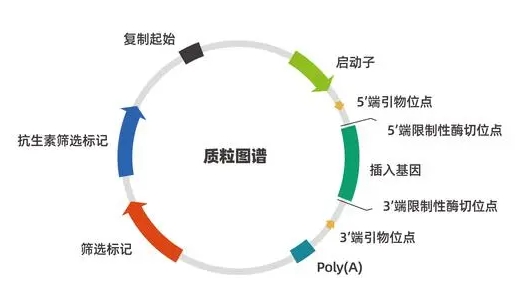


pAcGFP1-1 encodes the green fluorescent protein AcGFP1, a derivative of AcGFP from Aequorea coerulescens. AcGFP1 has been optimized for brighter fluorescence. (Excitation maximum = 475 nm; emission maximum = 505 nm.) The coding sequence of the AcGFP1 gene contains silent base changes, which correspond to human codon-usage preferences (1).
pAcGFP1-1 is a promoterless vector that can be used to monitor transcription from different promoters and promoter/enhancer combinations inserted into the multiple cloning site (MCS). Sequences upstream of AcGFP1 have been converted to a Kozak consensus translation initiation site (2) to enhance translation efficiency in eukaryotic cells. SV40 polyadenylation signals downstream of the AcGFP1 gene direct proper processing of the 3′ end of the AcGFP1 mRNA. The vector backbone contains an SV40 origin for replication in mammalian cells expressing the SV40 T antigen, a pUC origin of replication for propagation in E. coli, and an f1 origin for single-stranded DNA production. A neomycin-resistance cassette (Neor) allows stably transfected eukaryotic cells to be selected using G418. This cassette consists of the SV40 early promoter, the neomycin/kanamycin resistance gene of Tn5, and polyadenylation signals from the Herpes simplex virus thymidine kinase (HSV TK) gene. A bacterial promoter upstream of the cassette expresses kanamycin resistance in E. coli.
AcGFP1 can be used as an in vivo reporter of gene expression. Promoters should be cloned into the pAcGFP1-1 MCS upstream from the AcGFP1 coding sequence. Without addition of a functional promoter, this vector will not express AcGFP1. The recombinant AcGFP1 vector can be transfected into mammalian cells using any standard method. If required, stable transfectants can be selected using G418 (3).

基因搜项目发展历程最早可追溯至2010年01月05日域名注册,项目发起即为促进基因资源共享,避免在基因研究工作中“重复造轮子”,节约广大科研精英的宝贵时间和精力。
让基因研究更简单!
您值得信赖的一站式基因研究合作伙伴!